By Bill McKibben, Published: May 23
Caution: It is vitally important not to make connections. When you see pictures of rubble like this week’s shots from Joplin, Mo., you should not wonder: Is this somehow related to the tornado outbreak three weeks ago in Tuscaloosa, Ala., or the enormous outbreak a couple of weeks before that (which, together, comprised the most active April for tornadoes in U.S. history). No, that doesn’t mean a thing.
It is far better to think of these as isolated, unpredictable, discrete events. It is not advisable to try to connect them in your mind with, say, the fires burning across Texas — fires that have burned more of America at this point this year than any wildfires have in previous years. Texas, and adjoining parts of Oklahoma and New Mexico, are drier than they’ve ever been — the drought is worse than that of the Dust Bowl. But do not wonder if they’re somehow connected.
If you did wonder, you see, you would also have to wonder about whether this year’s record snowfalls and rainfalls across the Midwest — resulting in record flooding along the Mississippi — could somehow be related. And then you might find your thoughts wandering to, oh, global warming, and to the fact that climatologists have been predicting for years that as we flood the atmosphere with carbon we will also start both drying and flooding the planet, since warm air holds more water vapor than cold air.
It’s far smarter to repeat to yourself the comforting mantra that no single weather event can ever be directly tied to climate change. There have been tornadoes before, and floods — that’s the important thing. Just be careful to make sure you don’t let yourself wonder why all these record-breaking events are happening in such proximity — that is, why there have been unprecedented megafloods in Australia, New Zealand and Pakistan in the past year. Why it’s just now that the Arctic has melted for the first time in thousands of years. No, better to focus on the immediate casualties; watch the videotape from the store cameras as the shelves are blown over. Look at the news anchorman standing in his waders in the rising river as the water approaches his chest.
Because if you asked yourself what it meant that the Amazon has just come through its second hundred-year drought in the past five years, or that the pine forests across the western part of this continent have been obliterated by a beetle in the past decade — well, you might have to ask other questions. Such as: Should President Obama really just have opened a huge swath of Wyoming to new coal mining? Should Secretary of State Hillary Clinton sign a permit this summer allowing a huge new pipeline to carry oil from the tar sands of Alberta? You might also have to ask yourself: Do we have a bigger problem than $4-a-gallon gasoline?
Better to join with the U.S. House of Representatives, which voted 240 to 184 this spring to defeat a resolution saying simply that “climate change is occurring, is caused largely by human activities, and poses significant risks for public health and welfare.”
Propose your own physics; ignore physics altogether. Just don’t start asking yourself whether there might be some relation among last year’s failed grain harvest from the Russian heat wave, and Queensland’s failed grain harvest from its record flood, and France’s and Germany’s current drought-related crop failures, and the death of the winter wheat crop in Texas, and the inability of Midwestern farmers to get corn planted in their sodden fields. Surely the record food prices are just freak outliers, not signs of anything systemic.
It’s very important to stay calm. If you got upset about any of this, you might forget how important it is not to disrupt the record profits of our fossil fuel companies. If worst ever did come to worst, it’s reassuring to remember what the U.S. Chamber of Commerce told the Environmental Protection Agency in a recent filing: that there’s no need to worry because “populations can acclimatize to warmer climates via a range of behavioral, physiological, and technological adaptations.” I’m pretty sure that’s what residents are telling themselves in Joplin today.
Bill McKibben is founder of the global climate campaign 350.org and a distinguished scholar at Middlebury College in Vermont.
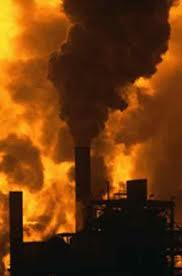 When you plug ANYTHING into your wall socket, including an electric car, it is likely being generated by coal, or by a withering nuclear plant.


