Showing posts with label consumerism. Show all posts

The Many Definitions Of "Sustainability"

I've been skeptical of terms as they come and go. (earlier post) Sustainability, again, is one of them. Yup, cultural definitions evolve and morph. But when the tag for the future dynamic of Earth jumps all over the map, we need to take stock of what exactly is at stake. 

The following definitions were compiled and distributed recently by a conference session here in Madison. They represent some current versions of sustainability. I'm taking the liberty to comment. Others?

  • Sustainable development is development that meets the needs of the present without compromising the needs of future generations to meet their own needs.
Brundtland Report (World Commission on Environment & Development)
Is sustainable development an oxymoron?

  • Sustainable design is the set of perceptual and analytic abilities, ecological         wisdom, and practical wherewithal essential to making things that fit in a world of microbes, plants, animals, and entropy. In other words, (sustainability) is the careful meshing of human purposes with the larger patterns and flows of the natural world, and careful study of those patterns and flows to inform human purposes.
David Orr, Ecological Literacy 
Philosophically sound if humans follow suit with patterns and flows. 

  • Sustainability is the ability to achieve continuing economic prosperity while protecting the natural systems of the planet and providing a high quality of life for its people. Achieving sustainable solutions calls for stewardship, with everyone taking responsibility for solving the problems of today and tomorrow-individuals, communities, businesses and governments are all stewards of the environment.
 Environmental Protection Agency
This government agency has two sides to its mouth: economic prosperity vs. stewardship.  Paradox.

  • Sustainability is asking ourselves today: How much do we really need? Then, not taking more from the earth than that.
Alliance for Global Sustainability Principle Investors
Huh?

  • A transition to sustainability involves moving from linear to cyclical processes and technologies. The only processes we can rely on indefinitely are cyclical; all linear processes must eventually come to an end. 
Dr. Karl Henrik-Robert, MD, founder of The Natural Step, Sweden
True.


  • Sustainability is the capacity to endure. In ecology the word describes how biological systems remain diverse and productive over time. Long-lived and healthy wetlands and forests are examples of sustainable biological systems. For humans, sustainability is the potential for long-term maintenance of wellbeing, which has environmental, economic, and social dimensions.
Wikipedia (Jan 2011)
The first sentence is true, which is why resilience may be a better overall concept than sustainability.


  • Sustainability occurs when human activity does not adversely affect the quality of the environment and resource base available for future generations of living things on the planet.
Alliance for Global Sustainability Principle Investors
Many resource bases have already been altered beyond future availability.


  • Sustainability is equity over time.  As a value, it refers to giving equal weight in your decisions to the future as well as the present. You might think of it as extending the Golden Rule through time, so that you do unto future generations (as well as to your present fellow beings) as you would have them do unto you.
Robert Gilman, Director Context Institute
Yes.  ["Why should I do anything for future generations. They haven't done anything for me." Groucho Marx]


  • Leave the world better than you found it, take no more than you need, try not to harm life or the environment, make amends if you do.
Paul Hawken
True, but already unattainable. 

  • A thing is right when it tends to preserve the integrity, stability, and beauty of the biotic community. It is wrong when it tends otherwise.
Aldo Leopold, A Land Ethic, from Sand County Almanac
Simple and wise

  • Clean air, clean water, safety in city parks, low-income housing, education, child care, welfare, medical care, unemployment (insurance), transportation, recreation/cultural centers, open space, wetlands... 
Hazel Wolf, Seattle Audubon Society
Finally getting to the social justice?


Electric Cars: Advertised As Emission Free?

Take a step back and think this through...

There's a manufactured consumer war between oil and coal energies.  Who'da thunk we'd arrive within this realm of advertising? There are currently commercials that pit internal combustion engines against electricity. Which one is creating the most carbon pollution? Careful.

Here's a car commercial. Amusing scenario - the array of appliances and tools that are normally clean electric are, instead, run by internal combustion engines.


And so, the clean little Nissan LEAF is unplugged and ready for a clean drive because the extension chord does not create exhaust. (Did you catch the dig on the Chevy Volt; a hybrid?) 

Otherwise, it's black smoke and fumes. This is what gasoline combustion spews, right? Yes, but what is the unspoken implication here about electricity? Clean?

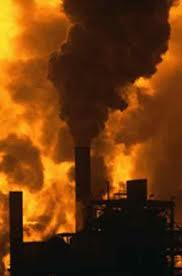
Picture a coal-fired electric generation plant. We've seen the stacks in the distance. Black plumes on the horizon. The question is, then: Is gasoline combustion better, or coal combustion better?  

When you plug ANYTHING into your wall socket, including an electric car, it is likely being generated by coal, or by a withering nuclear plant.

I'm pretty sure these commercials aren't assuming their electric cars are powered by wind generators or solar, which would be cleaner than coal. And, though wind and solar are the answer for many smaller applications, these renewables are not anywhere near a substantial resource at this point.

So, what are we ultimately talking about? Emissions? Yes. Guess what? The fossil fuel coal and the fossil fuel oil both emit crippling amounts of carbon into our biosphere. Is there even a lesser of two evils?

The play is to convince the fickle public to look at a quiet, clean, convenient, benign electrical outlet on the wall and conclude that this clean little plastic slot is producing clean energy with a little zap.

Aaaarrgh.


Past Lesson Plan: Consumer Imports Make Their Stand

I wasn't going to include lesson plans on this blog, but one comes to mind that gave me an "ah-hah!" moment a couple of years ago: Shrinking geography and growing energy usage.


As a part of getting the feel for continents and an exposure to their countries I have had kids check their own homes for tags and markings that show a manufacturing country of origin. Clothing, toys, kitchen items, etc. We usually assembled quite a list. But this particular time we polled 55 countries! This from a 4th grade class of 21, in the midwest. 


Canada, United States, Mexico, Belize, Guatemala, El Salvador, Honduras, Nicaragua, Cuba, Dominican Republic, Puerto Rico
Colombia,  Brazil, Peru, Bolivia, Chile, Argentina
Egypt, Nigeria, Kenya, Madagascar, Namibia
Sweden, Denmark, Germany, France, Italy, Greece, Russia
Turkey, Israel, Kuwait, Turkmenistan, Kazakhstan, Pakistan, India, Bangladesh, Sri Lanka, Thailand, Laos, Cambodia, Vietnam, Brunei, Maylasia, Indonesia, Mongolia, Korea, Japan, China, Taiwan, Hong Kong, Macau, Marianna Islands, Philippines, 
 Australia
I certainly don't require 4th graders to memorize world countries - seven  continents is enough... But I think an exposure to the political units on these continents is important. Kids will have heard place names like "Thailand" and "Nigeria" and "Bolivia" and associate them with homes beyond our own. Other homes; other cultures. 


As we wrote our country names onto stickies and put them on the world map up front, I began to sense a geography surge. The products in these fourth grade homes all came marching from foreign ports, across and above the four major oceans. Thousands and thousands and thousands of miles on the water and in the air.

World Shipping Lanes


Imports. Energy intensive imports. Right there on our wall map: Products that were somehow outsourced for cheap and/or unjust labor or inexpensive materials. It's been going on for years, of course. But the amount of finite fuel used and emissions spewed simply to carry products from one part of the world to another is grotesque.  


Currently, I cannot go through a store without checking the origin of products. I am cursed and obsessed. Especially in big box stores. It used to be just an exercise in geographic distribution, but now I visualize miles and fuel. Not that I necessarily need all these products - there are hundreds of frivolous objects that don't contribute to my quality of life. But, someday in the relatively near future, these will start to disappear from our shelves.


Do we wean away from them voluntarily now, or wait for them to be yanked because fuel for such non-essentials is unavailable?


What will the shipping lane map look like in twenty years?


What will the clothing tags of 4th graders look like twenty years from now?


Try Some Video Animations

Say it a different way. Say it with animation. Not cartoons, per se, but a format of creative seriousness. The issues we need to face can be presented in such dire ways. Maybe we need less talking heads and simpler images...

Enjoy!
~ ~ ~ ~ ~ 

Alec Loorz is the 15-year-old originator and leader of KIDS VS GLOBAL WARMING out of California.  He's been at this since age 12; produced this video at age 15; is Al Gore's youngest Climate Change Trainer.  Alec's short slide show iMatter is the most succinct visual around. Wander his site to see what youth are really doing across the country!  


~ ~ ~ ~ ~ 


350.org, led by Bill McKibben, is the most successful global organization to develop grass roots support for climate action. Check out two of their animated clips, devised to send their messages through the range of worldwide languages.  Because The World Needs To Know explains the climate change issue in reference to the number 350: the maximum parts-per-million concentration of carbon in the atmosphere that will sustain life. In Every Corner of the World was produced last year to promote the global actions before the Copenhagen Conferences. This action was the largest such civilian movement ever.

                                            ~ ~ ~ ~ ~ 


Talk about doing with less!! Annie Leonard has spent decades analyzing consumer products, their origins, use and disposal. She began with her famous The Story of Stuff to combine her own presentation with animated examples. Like an animated smart board! 


Oil Pipeline Leaks in the United States

Population Connection - World Population Growth