Once again, the images and conditions in Haiti bring to mind the unbalanced distribution of natural resources. This time it’s water. Even in “good” times, Haitians had water quality problems. Now, fractured plumbing and polluted water remain. And for those buried in the rubble, the water-clock always ran for their survival.
Is Earth’s fresh water a human right?
Here is water by the numbers, starting in a grand way from blue planet proportions down to the actual availability for human consumption.
70% of Earth is covered by water
97% of this water is undrinkable seawater
2% of remaining freshwater is locked up in polar ice caps (for now)
1% of remaining freshwater is available for human work and consumption
.5 of this 1% is polluted
Water is a human right, unlike oil or coal or even corn. Civilizations were attracted to direct water sources for food and water. The midwest Indian mounds overlooked lakes and rivers. The Nile. Tigris and Euphrates. Ganges.
Only 1% of all water on Earth is readily available to us. One half of that is polluted. And, of course, fresh water is unevenly distributed worldwide. As populations have grown over the millennia, much of the water has been overused; polluted. People moved into regions with less water availability. Some water began to be piped in. (ei. Romans aquaducts.) Rivers were diverted and dammed. As numbers grew and populations overshot the carrying capacity of a region, water to sustain them became scarce. Aquifers lowered and wells had to be deeper. Technology and power was often not available to pump at greater depths. Sanitation might have been marginal and contributed to the pollution. Hence, the concern about our half-a-percent.
The Tap
In terms of personally conserving a resource, monitoring water consumption is a very visual and concrete action. It’s not like, say, unplugging the air conditioner, which reduces the need for electric power generation from a distant coal steam plant. We can’t quite picture this steam plant. It’s just at the end of the electric lines somewhere. The coal to power this plant comes in railroad cars. We’ve seen the cars on sidings, but don’t give much thought to where they were filled with chunks of anthracite. Somewhere in Pennsylvania? Wyoming? It’s all so distant. Powering down electrically at home can be quite an abstract act. Some extra thought is necessary in taking conservation measures.
 Managing our water, however, is right at our fingertips and in the shampoo of our hair. Sure, it’s pumped into our home, but we know it’s local. (Madison Water Utility) There are even little pump houses around the city that are named for local water utility directors! So, we turn off the faucet and the water stops. We let it run while we brush our teeth and the water goes down the pipes. It’s an easier resource to regulate up close. Like, right at the tap. Very concrete.
We do have the luxury of turning on a tap anywhere we like. Our homes have multiple taps for myriad purposes. Public buildings, parks, roadside rest areas, sidewalk bubblers- we take plumbing and running water for granted. We take pumps and irrigators and swimming pools for granted. Water pressure is a given. Power to create water pressure is a given. We can fill a water bottle, a canteen or a radiator nearly anywhere.
The Well
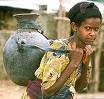
Over 1,000,000,000 of the world’s population must walk more that 15 minutes to get to a drinking water source. Most of the water-carrying is done by women and it is generally a daily task. At times they must wait in line at the wells for the average five gallons they can carry. The time it takes to walk to wells saps time from other work waiting at home. During dry seasons the surface wells shrink or disappear. These folks take water very seriously.
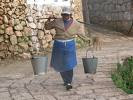

Has their local water depleted over the centuries? Is the population too great to be sustained by the natural water available in the region? Has the water been diverted for industry? Totally taken out of its natural
water cycle? Has a regional war cut off former water sources?
The Bottle
With the miserable state of water for so many people of our planet, is it arrogant that our culture uses so much fossil fuel to produce plastic containers, then fill them with water, then use more fuel to ship them around the country, just so we can take convenience to its extreme?
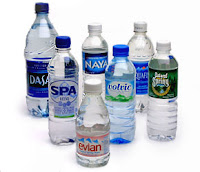
"An estimated total of the equivalent of 32 million to 54 million barrels of oil was required to generate the energy to produce the amount of bottled water consumed in the United States in 2007" Thompson
Is this one of those ultimate entitlements of industrialized wealth? Are we so out of touch that we cannot plan for the water we need for a day? Can we not tak the few moments of time needed to fill our own bottle from a tap?
"Americans go through 2,500,000 plastic water bottles every hour." (Roddick)
Coca-Cola and Nestle are elated that they can broaden their soda base by simply filling the same plastic containers with...water! They have their advertising down. They know the tactics. They know their consumers. They are getting very rich. Rich from a valued resource that should be a human entitlement.
From the United Nations:
“Declining freshwater sources and growing demand had created a situation whereby those who owned and controlled water were in a very powerful position... Was access to water a human right or a need? Was it a common good like air or a commodity like Coca-Cola? Who was being given the power to turn on the tap, Governments or the “invisible hand” of the market? Who set prices, a locally elected water board or a far-away CEO? Those urgent questions were being addressed by communities around the globe.
“Corporations such as Coca-Cola, Nestle and Pepsi had come under protest in India, New England and Canada, where they were considered “water hunters” which extracted the resource as quickly as possible and moved on before allowing supplies to replenish. In addition, the use of bottled water in a country with clean tap water was “a terrible mistake”.


