Showing posts with label insights. Show all posts

Raise Your Hands!


OK, raise your hands if you are currently numbed to the following terms: sustainability,  local produce,  greenhouse gas.  How about: carbon footprint,  wind farms,  peak oil?  Try these: Kyoto Protocol,  clean coal,  climate change.  Yeah, me, too.               
Seriously. I hear these and others through media and learned friends. The terms are casually thrown around so much that their significance seems gutted or condensed. (...polar bear...) They get swept under the rug. (...rain barrel...)  Why is that?  
We, as teachers, do need to be very alert to the whole global health thing.  As I dig into the issues at hand for the near future I find the whole concept intimidating and overwhelming. I do keep up on current events.  Educators do that. But current events that affect the future...well...that’s sometimes a different story. Many issues require a deep breath and some fortitude to read and digest.

Yet we are the facilitators for the school kids who will be front and center in twenty years, as mega-world decisions have to be made. What are our obligations in this department?  
I believe it's clear teachers ought to be involved, and now. What we internalize ourselves and how we pass it along to kids is up for discussion. Lot’s of it.  I’m sure topics like ethics and politics and geography and wealth will come up. Light themes, heavier themes, themes from daily living. Lot's of stuff for reflection. 


Thanks for listening.

(...Prius...)  

Electric Cars: Advertised As Emission Free?

Take a step back and think this through...

There's a manufactured consumer war between oil and coal energies.  Who'da thunk we'd arrive within this realm of advertising? There are currently commercials that pit internal combustion engines against electricity. Which one is creating the most carbon pollution? Careful.

Here's a car commercial. Amusing scenario - the array of appliances and tools that are normally clean electric are, instead, run by internal combustion engines.


And so, the clean little Nissan LEAF is unplugged and ready for a clean drive because the extension chord does not create exhaust. (Did you catch the dig on the Chevy Volt; a hybrid?) 

Otherwise, it's black smoke and fumes. This is what gasoline combustion spews, right? Yes, but what is the unspoken implication here about electricity? Clean?

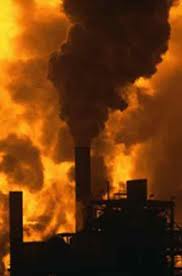
Picture a coal-fired electric generation plant. We've seen the stacks in the distance. Black plumes on the horizon. The question is, then: Is gasoline combustion better, or coal combustion better?  

When you plug ANYTHING into your wall socket, including an electric car, it is likely being generated by coal, or by a withering nuclear plant.

I'm pretty sure these commercials aren't assuming their electric cars are powered by wind generators or solar, which would be cleaner than coal. And, though wind and solar are the answer for many smaller applications, these renewables are not anywhere near a substantial resource at this point.

So, what are we ultimately talking about? Emissions? Yes. Guess what? The fossil fuel coal and the fossil fuel oil both emit crippling amounts of carbon into our biosphere. Is there even a lesser of two evils?

The play is to convince the fickle public to look at a quiet, clean, convenient, benign electrical outlet on the wall and conclude that this clean little plastic slot is producing clean energy with a little zap.

Aaaarrgh.


Summer Solstice (2) - Benchmark of Basic Nature


Through the millennia, an absolute basic symbol of human awareness to Mother Earth's systems was the longest day of our year. Consider how rudimentary the concept, and yet how neglected this building block of nature has become.  James Carroll writes a concise but sweeping piece here on the human-ness factor of the summer solstice.

Published on Monday, June 20, 2011 by the Boston Globe

A Solstice Approaches, Unnoticed


ONCE, HUMANS were intimate with the cycles of nature, and never more than on the summer solstice. Vestiges of such awareness survive in White Nights and Midnight Sun festivals in far northern climes, and in neo-pagan adaptations of Midsummer celebrations, but contemporary people take little notice of the sun reaching its far point on the horizon. Tomorrow is the longest day of the year, the official start of the summer season, the fullest of light — yet we are apt to miss this phenomenon of Earth’s axial tilt, as we miss so much of what the natural world does in our surrounds.
In recent months, catastrophic weather events have dominated headlines as rarely before — earthquakes and tsunami in Asia; volcanic cloud in Europe; massive ice melts at the poles; tornadoes, floods, and fires in America. “Records are not just broken,” an atmospheric scientist said last week, “they are smashed.” Without getting into questions of causality, and without anthropomorphizing nature, we can still take these events as nature’s cri de coeur — as the degraded environment’s grabbing of human lapels to say, “Pay attention!”

To our ancestors in the deep past, that attention to nature was, well, natural. They made the evolutionary leap into human consciousness through close observation, among other things, of what heavenly bodies do in the sky. In a cosmos over which they had no control, paying attention to patterns of heat and cold, light and dark, rain and drought was a matter of survival. The invention of agriculture depended on awareness of seasons, so that times of planting and harvesting, herding and grazing, could be depended upon. Movements of the sun and moon were seen to have both influences on, and counterparts in, individual human experience — from mood swings to menstruation to aging. Astrology opened into astronomy, calculation into mathematics, scrutiny into science. Definitions of the calendar were essential to culture. The solstice was a marker of all this.

But this habit of regard for nature was essential also to the transition into modernity. Contemplation of the sun was nothing less than the incubator of our age. Copernicus and Galileo, after all, ushered humans into the breakthrough of testable knowledge by means of their study — one theorizing, the other experimenting — of Earth’s place in the solar system. The solstice, previously perceived as the sun’s standing still for a moment before reversing course on the horizon, would never be understood that way again. Heliocentrism initiated the maturing of science, which eventually would demonstrate that seasonal rhythms not only produce global dynamics of climate but also hormonal changes — daily, weekly, monthly — within the individual human body, each person biologically synchronized to the cosmic clock. Because of science, we were able to grasp the age of the earth — to know that there have been more than 4 billion summer solstices. Humans awakened to the full complexity of the universe.

Ironically, the accompanying social revolution of industrialization led to illusions of human mastery over nature, and ultimately to detached indifference toward it. Contemporary technological civilization became blinded to key phenomena of the living world, much as the night sky is blotted out by the artificial light of cities. Most recently, the cycles of time have given way to the eternal present of the computer screen — detachment squared. As humans came to know so much, we lost our grip on the knowledge with which we became human: our familiarity with the physical universe we live in. Imagining that we no longer needed nature, we ourselves became the great threat to nature. As our sense of the complexities of life quickened and deepened, our destructiveness of life also quickened and deepened. Through ambitions of unlimited growth, consumption, competitive manufacture, and self-expanding technology, we humans have become a mechanism of extinction. When we stopped noticing Earth, we began to destroy it.

Intimate awareness of nature and its cycles, as we saw, was an ancient mode of survival. But survival is at issue again. Noticing the length of light now, reveling in the sun’s achievement, rejoicing in Earth’s perfect balance, honoring the summer solstice — loving it: This is how we became human, and it is how we stay human.

Personal Grounding By Poet Mary Oliver


The Summer Day
by Mary Oliver

Who made the world? Who made the swan, and the black bear?
Who made the grasshopper?
This grasshopper, I mean—
the one who has flung herself out of the grass,
the one who is eating sugar out of my hand,
who is moving her jaws back and forth instead of up and down—
who is gazing around with her enormous and complicated eyes.
Now she lifts her pale forearms and thoroughly washes her face.
Now she snaps her wings open, and floats away.
I don't know exactly what a prayer is.
I do know how to pay attention, how to fall down
into the grass, how to kneel down in the grass,
how to be idle and blessed, how to stroll through the fields,
which is what I have been doing all day.
Tell me, what else should I have done?
Doesn't everything die at last, and too soon?
Tell me, what is it you plan to do
with your one wild and precious life?

"The Summer Day" by Mary Oliver, from The Truro Bear and Other Adventures: Poems and Essays. © Beacon Press, 2008.

Do You Scratch and Claw to Stay Tuned to the World?

Busy lives. The world turns. Staying up to date on a daily basis is a chore, even with the newly anointed Scott Pelley on CBS. A full dose of Wolf still takes some screen time.


Are we really, though, getting the stories that matter to the future of 4th graders?? 


We are sort of on the cusp of seeing mainstream media reporting on uncomfortable issues of our future - beyond the economy. (Choose an economy; how about Greece...) In general, the themes of water, peak oil, climate change, cultural conflicts (read wars) and the needs of citizens in coming decades are neglected miserably.

Many blogsites compile pertinent daily articles and send them out as a bundle to subscribers. (Sometimes there is a small subscription fee.) Articles are culled from many sources and cover everything from breaking news to opinion. 


Such as:
Speaking Truth to Power Daily News Digest from Carolyn Baker
Common Dreams
Energy Bulletin


Here are some examples of articles brought to light on subscription bundles in only the past two weeks or so (of many more!). Take a glance at the variety of content, which is generally neglected in reports from other media. I have highlighted key words. Scan the variety of articles. Get a feel for how this may impact your own perceptions.


6/3/11 Wangari Maathai: Spiritual Environmentalism—Healing Ourselves by Replenishing the Earth
6/13/11 Oil company's lawsuit against Greenpeace backfires
6/2/11 Why Our Most Urgent Climate Struggles May Be Winnable by Bill McKibben
6/1/11 Population Footprints: Rights and Responsibilities — Behind the Numbers: The PRB blog on population, health, and the environment
6/1/11 Chris Hedges: The Sky Really Is Falling - Chris Hedges' Columns - Truthdig
6/15/11 Lawn Care Goes to the Sheep in a Pennsylvania School District - Planet Green
5/29/11 The Reality of Global Climate Change is Upon Us - Newsweek
6/3/11 Shortages of Fresh Water Seen as Emerging Threat - ABC News
6/13/11 USGS: Global Warming Drives Rockies Snowpack Loss Unrivaled in 800 Years, Threatens Western Water Supply
6/16/11 Summer Reading Suggestions | Center for Ecoliteracy
6/14/11 The Truth About The Economy In 2 Minutes | MoveOn.Org
6/16/11 Small farms may be better for food security and biodiversity | Science Matters | David Suzuki Foundation
5/2/11 In U.S., Optimism About Future for Youth Reaches All-Time Low
6/17/11 Humane Connection: 7 Resources for Finding Out About the Secret Lives of Your Stuff
6/14/11 Children Pay Ultimate Price of Iraq's Poisonous Wartime Legacy | Common Dreams
6/5/11 Josh Golin: Harry Potter and the Chamber of Commerce... and Other Scholastic Satires
6/1/11 The New Geopolitics of Food - By Lester R. Brown | Foreign Policy
6/10/11 Humanitarian crisis as world's largest refugee camp declared full | World news | guardian.co.uk
6/1/11 An End to Growth: The Environment’s Impact on our Economic Decline | Oil Price.com
2/16/11 Two seminal Nature papers join growing body of evidence that human emissions fuel extreme weather, flooding that harm humans and the environment | ThinkProgress
6/7/11 BBC News - Tropical forests 'better managed'
6/17/11 Will Alternative Energy Save Us From Peak Oil | Oil Price.com
6/13/11 Oil-giant Venezuela tries to limit energy use - Yahoo! News
6/3/11 Video: 15 Years of Saying YES!
5/26/11 The geology of the planet: Welcome to the Anthropocene | The Economist
6/15/11 Ten Charts That Embody Everything That's Wrong With The U.S. Economy
6/12/11 Field Notes from the Future- Children and Nature.Org
6/1/11 The Oil Drum | Oil prices and recession
6/7/11 Yemen Facing Humanitarian Catastrophe: UNICEF | Common Dreams
6/1/11 In The World After Abundance | Energy Bulletin
6/15/11 Sewing and Clothing Repair | Preparedness Advice Blog
6/16/11 Nebraska Nuclear Reactor Flooded

We do sifting and winnowing in class each day. I hope this creates resources for sifting the challenges of resilience to come.


Got To Have Happiness! :-)


What is Gross National Happiness??
“An interviewer asked why I put so much store in young people. Because young people don’t know what’s impossible. They are less burdened by the past so will try something new without bothering to ask if it has been tried before. That is always how big changes occur. When people set out to imagine a different future, there are no authorities."
William Greider

Youth will lead the way into a different future. But is there a spirit or outlook that can drive this leadership? Well-being? 


(love this graph's title)

We have something called the Gross National Product, which measures the full amount of economic productivity by a nation in terms of dollars. Then there's the Gross Domestic Product, which measures such activities only within a country’s borders. Since 1992, the US and most countries have used Gross Domestic Product. 


The GDP tends to be the dominant measure for the health of a nation. If this is the case, exactly which sector of health are we talking about?


“Gross National Product does not allow for the health of our children, the quality of their education, or the joy of their play. It does not include the beauty of our poetry or the strength of our marriages, the intelligence of our public debate or the integrity of our public officials. It measures neither our wit nor our courage, neither our wisdom nor our learning, neither our compassion nor our devotion to our country; it measures everything, in short, except that which makes life worthwhile.”        
 Robert F. Kennedy


For the past 40 years or so, a corollary view to GDP has been Gross National Happiness. Begun in the early 1970‘s in the Himalayan nation of Bhutan, the concept of Gross National Happiness is spreading today, notably in Brazil, Italy, Canada and the USA.

Measuring GDH is somewhat dicey but it does provide a framework for shifting away from our reliance on economic development and toward a focus on human contentment. GDH is a check and balance indicator of how healthy and happy a society is within this economic growth trance we've nurtured. 


Certainly, one form of a wake-up call to Gross National Happiness came from Egypt these past weeks. Citizens met their breaking point with frustrations involving jobs, food availability, an overpopulated region and restricted liberties. Lack of resources for sustaining daily life would frustrate anyone. Was there too much reliance on a GDP? Did this force GNH to take center stage?

Closer to home, Gross National Happiness USA is spreading its wonderful messages from the East Coast. Movements such as Sustainable Seattle are leading the way on the West Coast, where their Seattle Area Happiness Initiative includes a survey of The Nine Dimensions of Happiness. This list comes from GNH-USA, where you'll find more detailed explanations. 

How do these dimensions of happiness fit for you?

1. psychological well-being;
2. physical health;
3. time or work-life balance;
4. social connection and   community vitality;
5. education;
6. access to arts, culture and recreation;
7. environmental quality and access to nature;
8. good governance;
9 material well-being.

Is this a list pertinent to all global cultures? Just a thought…

"There's no present like the time." (Hard to say, isn't it?) 


Take Back Your Time, another US/Canadian venture incorporating GDH, seeks to encourage community interactions by refocusing daily "time famines" and overwork issues.


Collectively, then, GDH movements enable us to begin down the road of resiliency: a contentment with eyes wide open.